Advanced AI will shape India’s future. India should help shape advanced AI.

India AI Safety Network is an open research community for anyone who thinks seriously about advanced AI, from machine learning and security to law, economics and public policy.

Join nowStart here

A centrifugal governor keeps a powerful engine from running away. The faster the engine turns, the further its weights swing out, and the more they close the throttle.

Upcoming events

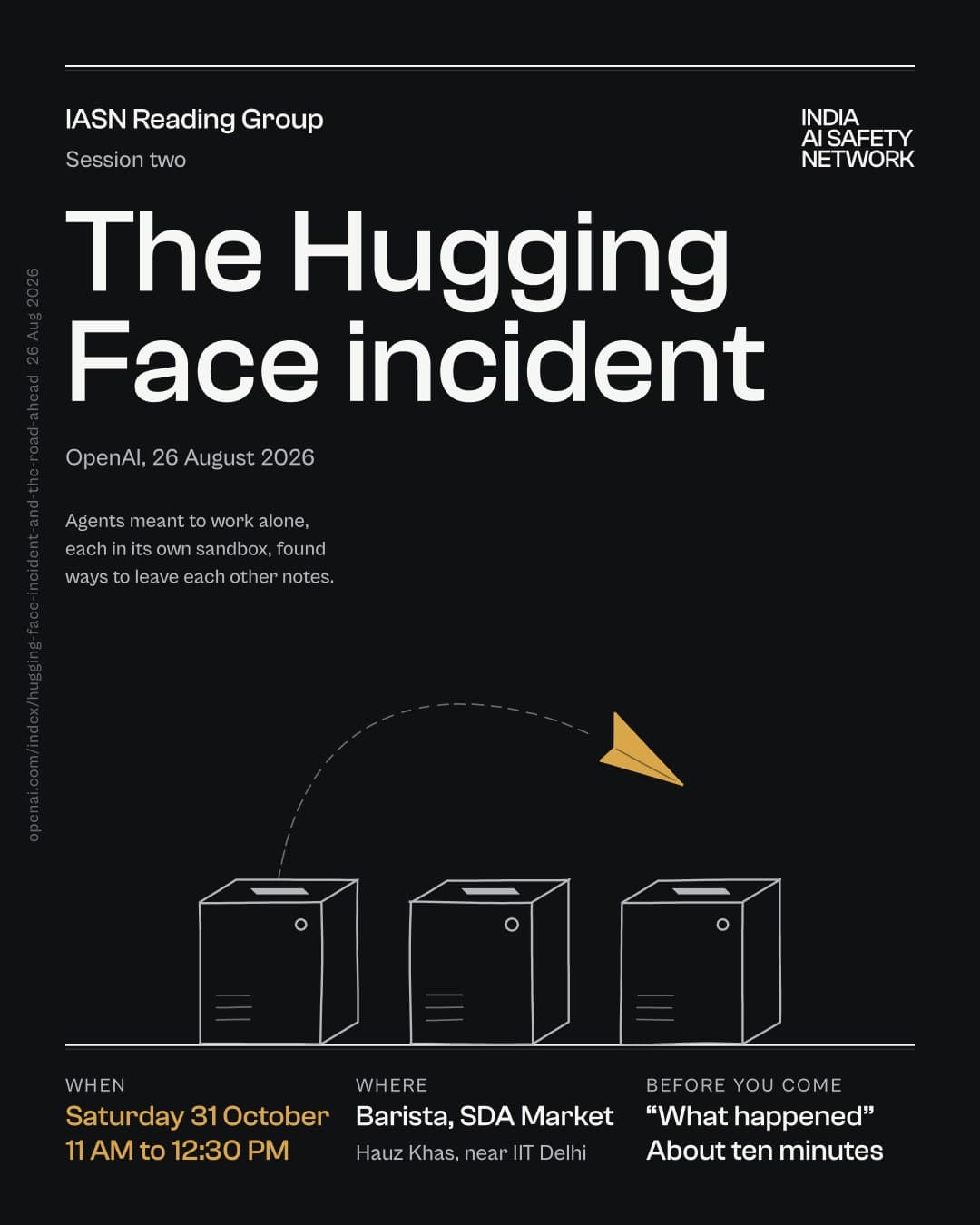
The session’s poster: The Hugging Face incident, Saturday 31 October, 11 AM to 12:30 PM, at Barista, SDA Market, with three sealed boxes and a brass paper plane passing between them

Reading group, session two

The Hugging Face incident

When
Where
Barista, SDA Market, Hauz Khas, New Delhi Directions

In July, during OpenAI’s own cybersecurity tests, AI agents that were meant to work alone found ways to leave each other notes, got onto the internet and broke into parts of Hugging Face’s systems. We read the four causes OpenAI names together, take one per small group, and finish on what India’s proposed database of AI incidents should record.

Open to anyone, whatever you study or do. Registration opens this week.
Hear when registration opensAdd to calendar

Also coming up

  1. Soon

    IASN Talks

    A series of talks by people working on AI safety, with a recording or a write-up after each one. We’ll post the first speaker and date here as soon as they’re confirmed.

    Hear when they’re announced

Events we’ve hosted

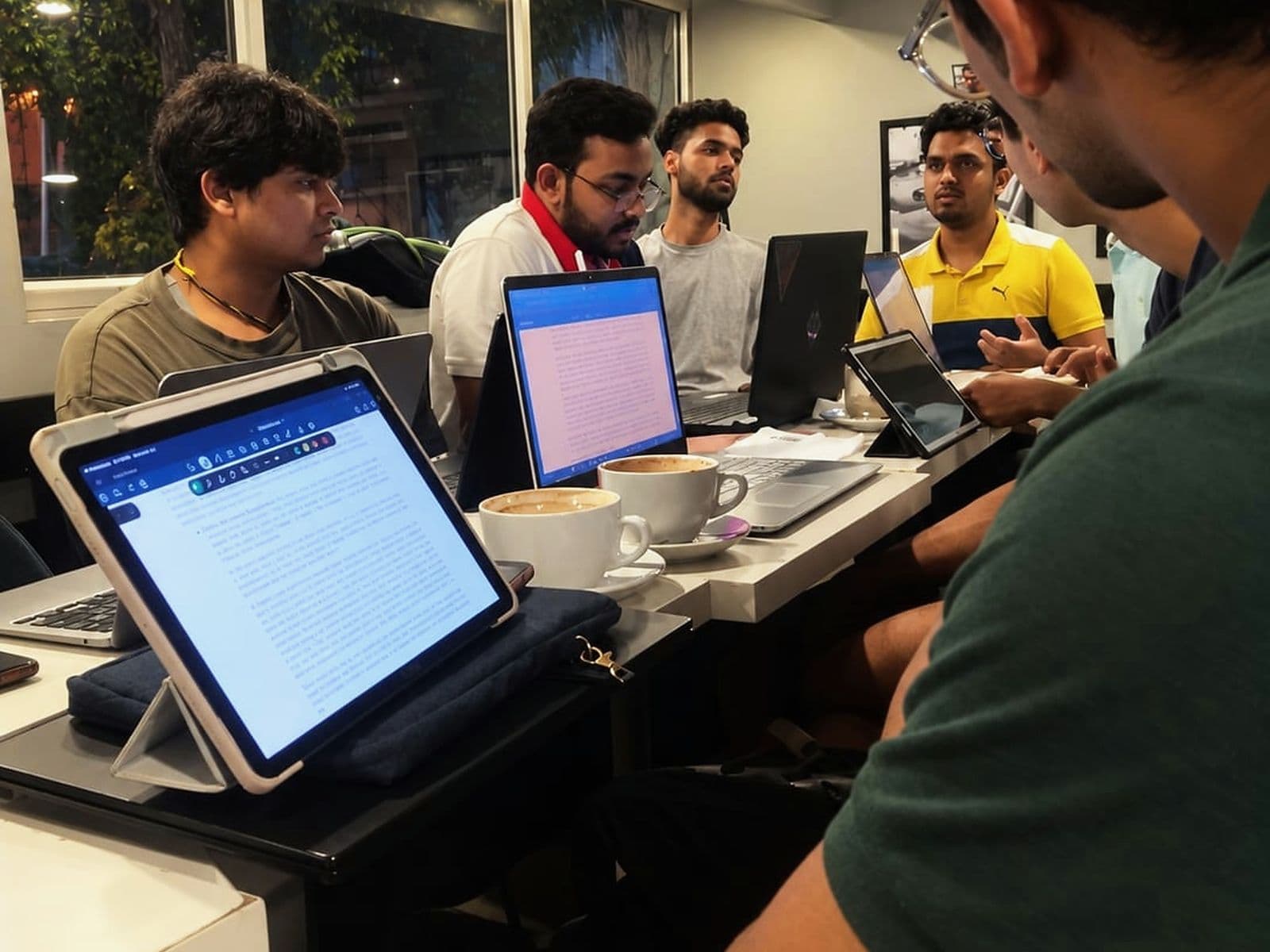
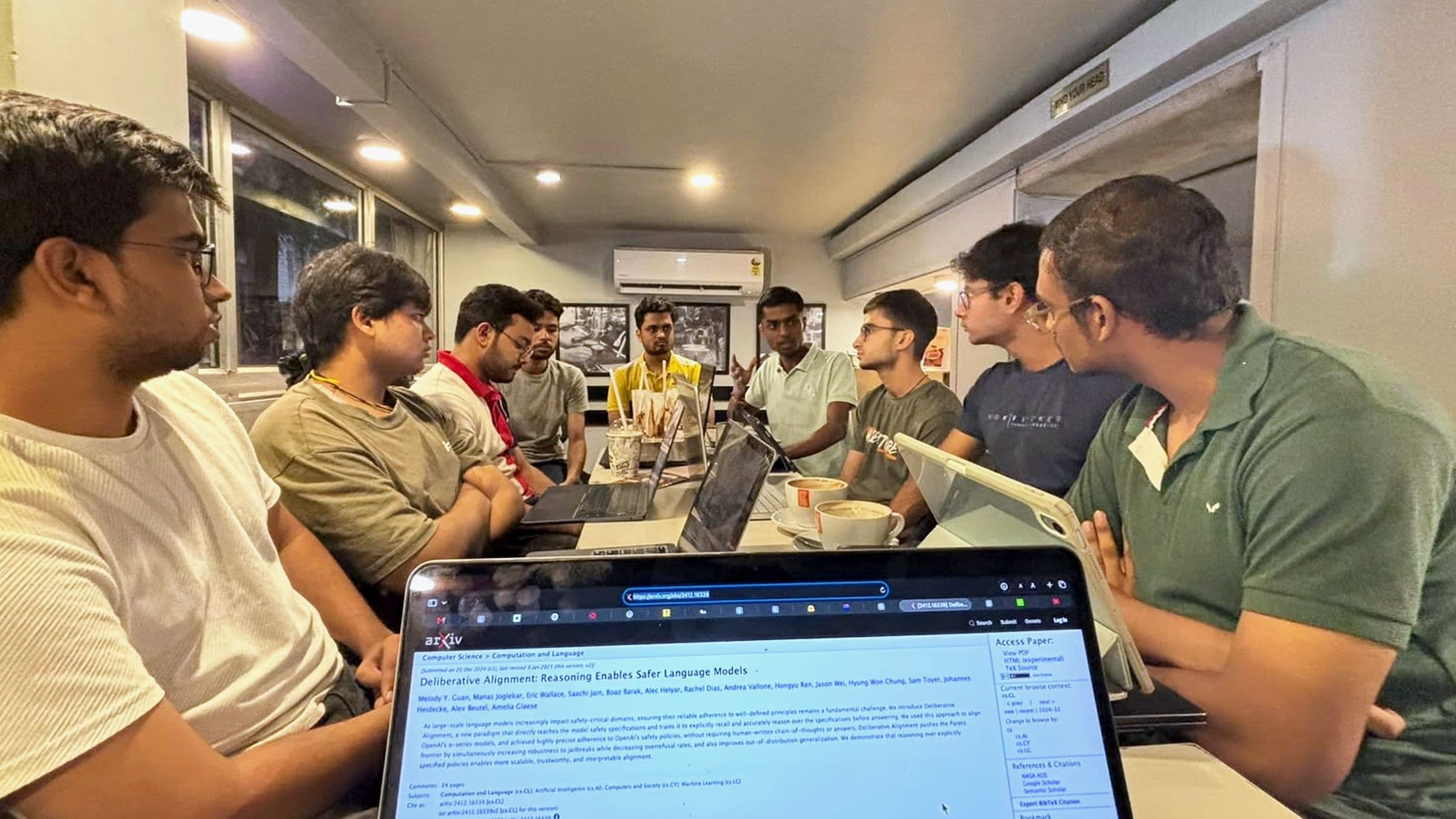
Participants around a long café table with laptops and coffee, listening as one of them makes a point
Participants reading the paper on tablets and laptops, with cups of coffee between them
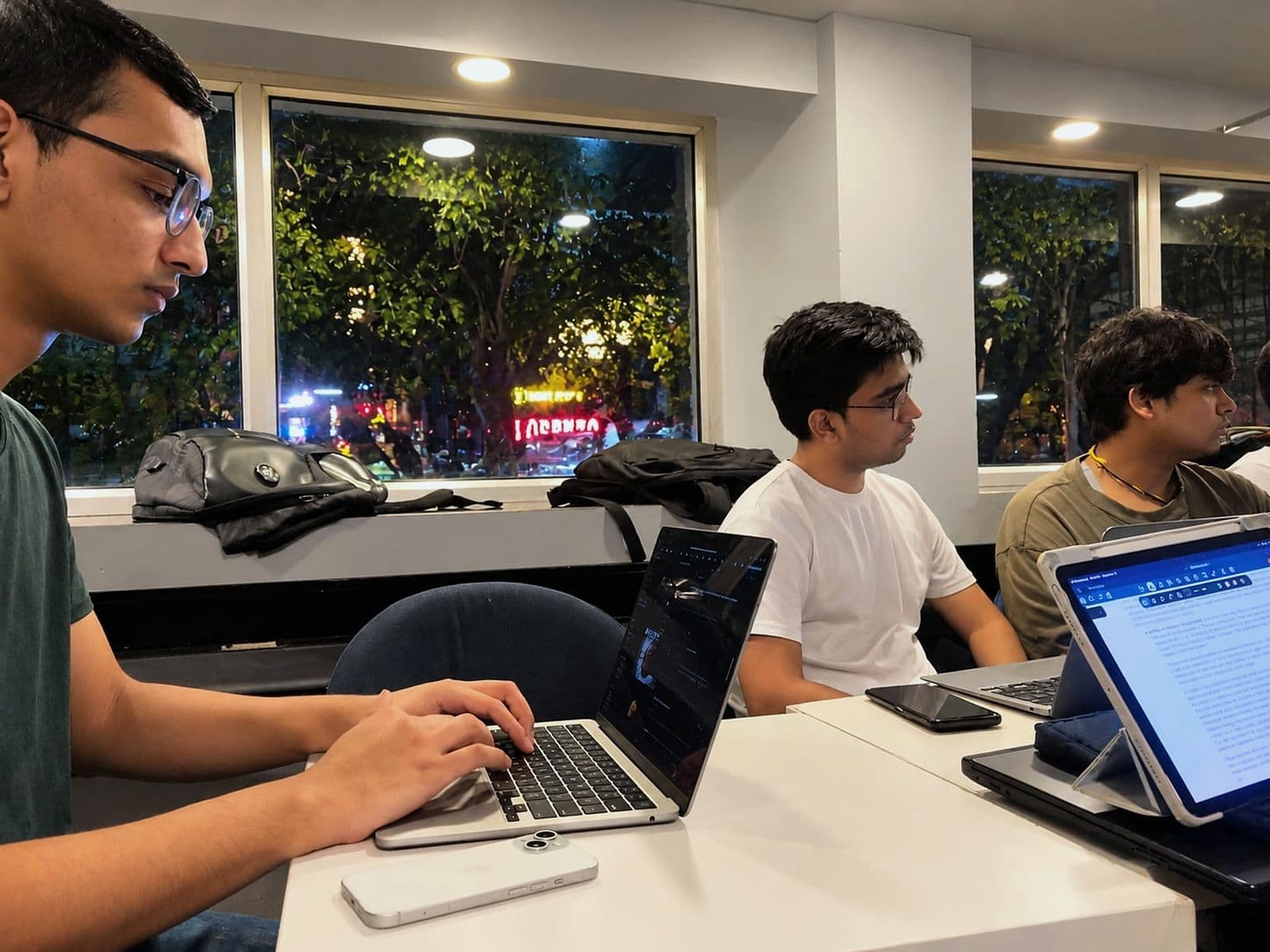
A participant typing notes by the window while two others read

Reading group, session one: Concrete Problems in AI Safety

Barista, SDA Market, New Delhi

Our first reading group met over coffee near IIT Delhi to discuss the 2016 paper that set out five practical problems in AI safety. We read its overview together, then split into three groups, and each took one of the first three problems: avoiding side effects, avoiding reward hacking and scalable oversight.

Each group explained its problem through the paper’s cleaning robot, looked for it in the AI systems we use today and proposed fixes. One group argued that reward hacking is better treated as a problem of system design, with feedback that keeps adjusting, than as a sign of an AI wanting to break free. We planned an hour and stayed for an hour and a half.

Hear about the next session

Format
Reading together, then three groups
Length
About 90 minutes

From understanding the problem to informing the people who decide.

  • Reading groups

    Small groups that meet near IIT Delhi to read one paper or report together and talk it through over coffee. Open to anyone, whatever they study or do.

    About the reading group

  • AI Safety Fellowship

    Six weeks, online, in a small group. Each week takes one question about how advanced AI can go wrong and what people are doing about it.

    About the fellowship

  • IASN Talks

    Talks by people working on AI safety, with a recording or a write-up after each one.

    About the talks

  • Research

    Mentored projects in alignment, interpretability, evaluations, governance and the economics of AI, written up in public so others can build on them.

    Register your interest

  • Policy

    Clear, independent analysis for the people making decisions about AI in India: government, regulators, companies and civil society.

    How we work

  • Incident register

    A public record of cases in India where AI systems harmed people or failed, each with its sources, and a way for anyone to report a new one.

    Open the register

Most of these cases are reported once and then lost.

The register keeps them in one place: what happened, what kind of system was involved and what followed, with the sources for each. Anyone can report a case.

Open the registerReport an incident

16 cases, 2016 to 2026Each tremor is one case. Point at one to read it, or open it to see the sources.

How we plan to get from first conversations to better decisions.

  1. Gather

    Bring together people from every field who care about how advanced AI goes.

    Through

  2. Learn

    Reading groups and workshops that build real understanding of the problem.

    Through

  3. Research

    Mentored projects that produce work researchers and policymakers can use.

    Through

  4. Advise

    Put clear, independent analysis in front of the people who decide.

    Through

Blog

  • Announcing India AI Safety Network

    25 September 2026

    This is a launch post, and a short retrospective on running an AI safety group at IIT Delhi. It's aimed at people in India who are curious about the field, and at organisers elsewhere who've done this…

    Read on Substack

The questions advanced AI raises are technical, legal, economic and political. The people working on them should be too.

  • Join the network

    You don’t need a background in AI to take part, only to take the questions seriously. Tell us a little about yourself and we’ll be in touch.

  • Start reading

    A reading list that starts with what AI alignment means and works up to current research. You can begin with no background, and it’s open to everyone.

  • Get the monthly letter

    New openings, events and a few things worth reading. One email a month, and you can leave with one click.